

CM Ration Card Program
CM Ration Card Program Punjab government has started releasing Rs. 3,000 payments under the CM Ration Card Program for eligible households. This financial assistance is intended to help low-income families manage rising household expenses and purchase essential food items. Thousands of deserving families have already started receiving payment notifications, while others are being advised to check their registered accounts regularly.
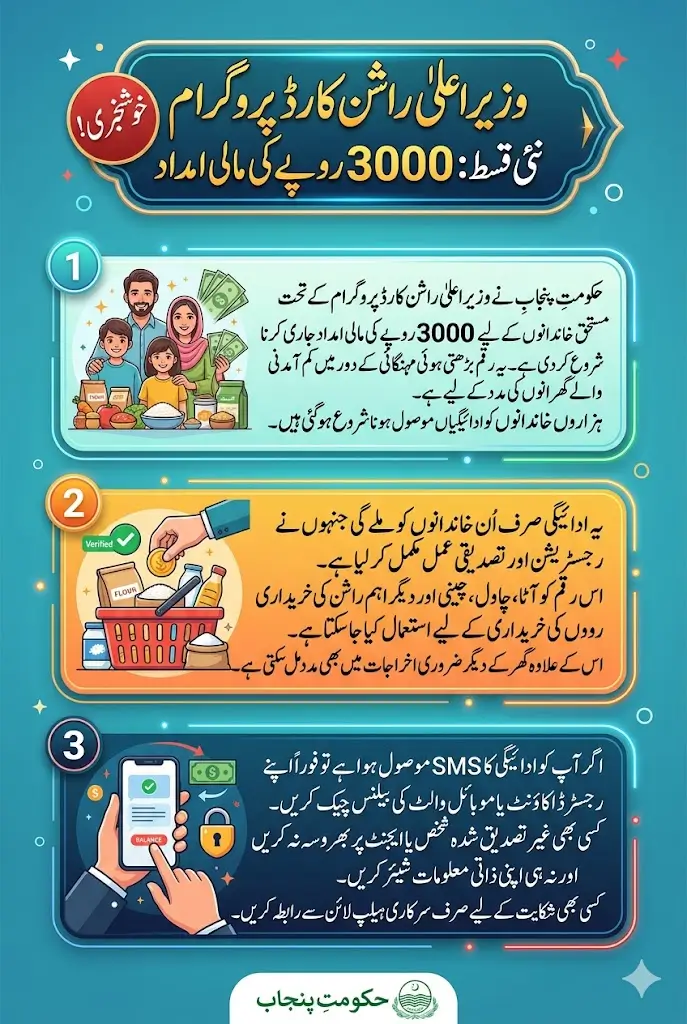
For many households across Pakistan, especially those struggling with inflation and increasing utility costs, this assistance can provide much-needed relief. Families who have completed their verification process and meet the program requirements may now be able to access their funds through approved payment channels. Beneficiaries should verify their payment status and follow official instructions to avoid delays or fraud.
What the New Rs. 3,000 Payment Means for Beneficiaries
The latest payment phase of the CM Ration Card Program has been launched to support deserving families facing financial difficulties. The Rs. 3,000 assistance is designed to help households purchase daily necessities and reduce the burden of increasing living costs.
In recent months, food prices and household expenses have continued to rise across the country. Many families have found it difficult to manage monthly budgets. This payment is aimed at providing immediate support so that eligible beneficiaries can meet essential needs without additional financial pressure.
The assistance can be used for:
- Purchasing flour, rice, sugar, and other food items
- Managing household grocery expenses
- Supporting children’s daily needs
- Covering basic utility-related costs
- Meeting essential family requirements
Families who receive official payment notifications should verify their balance as soon as possible and ensure that the credited amount matches the announced assistance.
Key Details of the Current Payment Phase
The government has released the latest payment installment for verified beneficiaries. The following table provides a quick overview of the program:
| Program Information | Details |
|---|---|
| Scheme Name | CM Ration Card Program |
| Financial Assistance | Rs. 3,000 |
| Beneficiaries | Eligible Low-Income Households |
| Current Status | Payment Released |
| Verification Requirement | Mandatory |
| Payment Purpose | Household and Ration Support |
This assistance is being distributed through approved payment mechanisms. Beneficiaries are encouraged to follow official updates and avoid relying on unverified sources of information.
Which Families Are Included in This Payment Cycle?
The current payment cycle primarily targets families that have already completed the required registration and verification procedures. Eligibility is determined using official welfare records and poverty assessment data.
Generally, the following groups may qualify:
- Low-income households
- Families registered in approved welfare programs
- Individuals successfully verified through official databases
- Households meeting poverty score requirements
- Beneficiaries who have completed account verification
It is important to understand that receiving a payment notification is usually a strong indication that the beneficiary has been approved for the current installment. However, all payments remain subject to verification requirements and program policies.
Families should ensure that their registration details remain accurate to prevent delays during future payment cycles.
Simple Ways to Confirm Your Payment Status
After receiving a payment notification, beneficiaries should immediately verify whether the amount has been credited to their registered account. Taking a few simple steps can help avoid confusion and unnecessary visits to payment centers.
Verification is important because payment notifications and account updates may not always arrive at the same time. Sometimes funds are credited before the SMS notification reaches the beneficiary.
Review Official Payment Notifications
The first step is to carefully review any SMS message received from official program channels. Beneficiaries should pay close attention to the sender’s details and avoid trusting messages from unknown numbers.
Important points include:
- Read the SMS carefully
- Verify that it comes from an official source
- Follow only approved instructions
- Avoid responding to suspicious messages
Official notifications generally contain information regarding payment approval and account status.
Check Your Registered Payment Method
Beneficiaries should verify the account or payment method linked to their registration. Depending on the payment mechanism, funds may be available through different approved channels.
Possible verification methods include:
- Registered bank accounts
- Mobile wallet accounts
- Approved payment partner services
- Designated collection centers
Checking the correct account helps ensure that the payment has been received successfully.
Verify the Available Amount
Once access to the account is confirmed, beneficiaries should check the available balance and confirm that the credited amount matches the announced Rs. 3,000 payment.
If the amount differs from the expected payment, beneficiaries should seek assistance through official support channels rather than relying on agents or middlemen.
Save Proof of Payment
Keeping payment records is always recommended. SMS notifications, receipts, and transaction confirmations can be useful if any issue arises in the future.
Beneficiaries should safely store:
- Payment receipts
- SMS confirmations
- Account transaction records
- Verification documents
These records may help resolve complaints more quickly if needed.
Actions to Take After Receiving Payment Confirmation
Many beneficiaries receive a payment message and immediately rush to collection points without verifying account details first. A better approach is to follow a simple and organized process.
After receiving confirmation:
- Verify that the message is genuine
- Check your registered account balance
- Confirm the credited amount
- Follow official withdrawal procedures
- Collect and keep transaction receipts
Following these steps can help prevent confusion and ensure a smooth payment collection experience.
Beneficiaries should also avoid sharing personal information with unauthorized individuals claiming they can speed up payment processing.
Why Some Beneficiaries May Experience Delays
Although payments have been released, some eligible households may not receive funds immediately. This situation is common in large-scale welfare programs where payments are distributed in phases.
Several factors may contribute to delays, including verification reviews and technical processing requirements.
| Possible Issue | Explanation |
|---|---|
| Ongoing Verification | Records may still be under review |
| Incorrect Information | Registration details may need correction |
| Staged Payment Distribution | Payments are released in different phases |
| Notification Delay | SMS alerts may arrive later than payment updates |
Beneficiaries whose verification has already been completed should continue checking official channels regularly for updates.
Essential Safety Guidelines for Payment Recipients
Whenever financial assistance programs release payments, fraud attempts often increase. Scammers may try to trick beneficiaries into sharing personal information or paying fake fees.
Remaining cautious can protect families from financial loss and identity theft.
Protect Your Personal Information
Beneficiaries should never share sensitive details with unknown callers, agents, or social media accounts.
Information that should always remain private includes:
- CNIC details
- OTP verification codes
- ATM PIN numbers
- Mobile wallet passwords
- Banking credentials
No genuine government representative will ask for such information through unofficial communication channels.
Recognizing Fake Payment Alerts
Fraudsters often send messages promising additional benefits or requesting registration fees. Beneficiaries should remember that legitimate welfare payments do not require advance payments.
Warning signs of fake messages include:
- Requests for money
- Suspicious links
- Unknown contact numbers
- Urgent threats or pressure tactics
- Promises of extra payments
Always verify information through official channels before taking any action.
Avoid Unauthorized Agents and Middlemen
Some individuals may claim they can help beneficiaries receive payments faster. In most cases, such claims are misleading.
Beneficiaries should:
- Use approved payment channels only
- Avoid unofficial service providers
- Follow government-issued instructions
- Report suspicious activity when necessary
Using official procedures is the safest way to receive assistance.
Official Procedure for Reporting Payment Problems
If a beneficiary faces issues such as missing payments or incorrect account information, the matter should be reported through authorized support channels.
When filing a complaint, beneficiaries should keep relevant records available. This helps support teams verify information more efficiently.
Useful documents may include:
- CNIC information
- Registration details
- SMS notifications
- Transaction receipts
- Verification records
Providing accurate information can significantly improve the chances of resolving the issue quickly.
How the Assistance Supports Household Budgets
For many low-income families, even a small amount of financial assistance can make a noticeable difference. The Rs. 3,000 payment helps households cover essential expenses that might otherwise become difficult to manage.
Many beneficiaries use the assistance for daily necessities such as groceries, children’s needs, and basic household items. In a period where inflation continues to affect purchasing power, this support provides practical relief.
Common uses of the assistance include:
- Food and grocery purchases
- Flour and ration expenses
- Children’s educational needs
- Utility bill support
- Essential household products
Such programs play an important role in helping vulnerable families maintain financial stability during challenging economic conditions.
Important Reminders Before Collecting Your Payment
Before collecting or withdrawing funds, beneficiaries should carefully review all account information and verify payment details.
Key reminders include:
- Check account balance regularly
- Follow official instructions only
- Keep all payment records secure
- Avoid sharing personal information
- Report suspicious messages immediately
Staying informed and cautious can help beneficiaries receive assistance safely and without complications.
Frequently Asked Questions About the CM Ration Card Payment
Who is eligible for the latest Rs. 3,000 assistance?
Eligible low-income families who meet program requirements and complete verification may qualify for the payment.
How can beneficiaries verify their payment status?
Beneficiaries can check official SMS notifications and verify their registered account balance through approved channels.
What should be done if the payment is not visible?
Continue monitoring official payment channels and ensure that registration information is accurate. Delays may occur due to verification or phased distribution.
Is verification mandatory before receiving assistance?
Yes, successful verification is generally required before payments are released to beneficiaries.
How can complaints be submitted for unresolved issues?
Complaints should be filed through authorized program support channels while providing accurate registration and payment details.
Conclusion
The release of Rs. 3,000 under the CM Ration Card Program is welcome news for thousands of deserving families across Pakistan. As inflation continues to place pressure on household budgets, this financial assistance can help beneficiaries manage essential expenses and purchase necessary ration items.
Eligible households should verify their payment status through official channels, follow approved collection procedures, and remain alert to fraud attempts. By staying informed and protecting personal information, beneficiaries can access their assistance safely and make the most of the support provided through the program.